Mahatma Gandhi Quotes: Inspiring Words on Truth, Peace, Life and Non-Violence
- Tanisha
- No Comments
Lorem ipsum dolor sit amet, consectetur adipiscing elit. Ut elit tellus, luctus nec ullamcorper mattis, pulvinar dapibus leo.
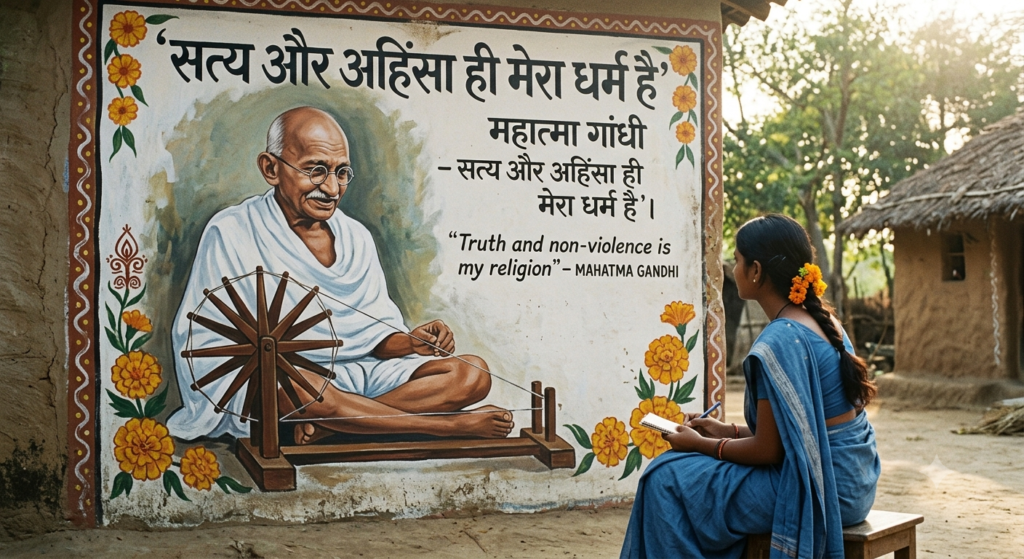
Mahatma Gandhi, widely known as the Father of the Indian Nation, remains an important figure in the history of India’s independence movement. His ideas about truth, non-violence, peace, simplicity and self-discipline continue to inspire students, teachers and readers around the world. Mahatma Gandhi quotes are frequently shared to express ideas about personal growth, peaceful living and social responsibility.
Gandhi believed that meaningful change begins with individual actions and that people can challenge injustice through peaceful resistance. His philosophy of Satyagraha influenced political movements and discussions about civil rights beyond India.
In this article, we explore inspirational Mahatma Gandhi quotes, their meanings, and the life lessons readers can learn from his philosophy.
Who Was Mahatma Gandhi?
Mohandas Karamchand Gandhi was born on 2 October 1869 in Porbandar, Gujarat. He studied law in London and later worked in South Africa, where his experiences with racial discrimination helped shape his commitment to civil rights and non-violent resistance.
After returning to India in 1915, Gandhi became a major leader in the Indian freedom struggle. He participated in campaigns such as the Non-Cooperation Movement, the Salt March and the Quit India Movement. His approach emphasised truth, non-violence, public participation and resistance to injustice.
Gandhi’s writings and speeches explored personal conduct, social reform, religion, education and political freedom. His ideas remain subjects of historical study, and his collected writings are available through the Gandhi Heritage Portal.
10 Inspiring Mahatma Gandhi Quotes and Their Meanings
The following quotations and thoughts reflect themes associated with Gandhi’s philosophy. Where a quotation is commonly attributed to Gandhi but its original source is uncertain, it should be verified before being presented as his exact words.
1. “My life is my message.”
This statement is widely associated with Mahatma Gandhi and is discussed in a Government of India feature about his philosophy.
Meaning: A person’s actions can communicate their values more clearly than words alone. Gandhi’s public life reflected his efforts to practise principles such as truth, non-violence and simplicity.
Life lesson: Try to make your daily actions consistent with your beliefs. Honesty, fairness and responsibility become meaningful when they are practised regularly.
2. “Inexhaustible patience is needed if Truth is to be brought home to anyone.”
This statement appears in the Gandhi Heritage Portal’s collection of Gandhi’s writings, with a reference to 28 July 1946.
Meaning: Communicating the truth may require patience, understanding and continued effort. People do not always change their opinions immediately, even when presented with information.
Life lesson: Listen carefully, explain your views respectfully and allow time for meaningful discussion.
3. “The light of knowledge can never dawn on the proud.”
This thought is recorded in the Gandhi Heritage Portal’s collection of writings, dated 30 August 1946.
Meaning: Pride can prevent people from recognising their mistakes or learning from others. Humility makes it easier to consider different perspectives.
Life lesson: Remain open to feedback, acknowledge errors and keep learning throughout life.
4. “Education which does not mould character is wholly worthless.”
This statement appears in the Gandhi Heritage Portal’s collection of Gandhi’s writings, with a reference to 7 January 1946.
Meaning: Education should involve more than memorising facts or earning qualifications. It should also help develop honesty, responsibility, discipline and concern for others.
Life lesson: Use education to build both knowledge and character. Apply what you learn in ways that are useful and ethical.
5. “We shall cease to think only of ourselves when we think of others.”
This thought is recorded in the Gandhi Heritage Portal’s collected writings, dated 11 August 1946.
Meaning: Concern for other people can help us move beyond self-interest. Communities become stronger when individuals consider how their decisions affect others.
Life lesson: Practise kindness, volunteer when possible and consider other people’s needs before making important decisions.
6. “The world may call us weak but we must not weaken our ideals.”
This statement appears in the Gandhi Heritage Portal’s collection of writings, with a reference to 8 February 1946.
Meaning: Holding on to ethical principles can be difficult when other people disagree with us. Gandhi’s philosophy encouraged people to remain committed to their ideals while resisting injustice peacefully.
Life lesson: Stand by your values, but express them with respect and a willingness to listen.
7. “The greatness of a person lies in his heart, not in his head, that is, intellect.”
This thought appears in the Gandhi Heritage Portal’s collected writings, dated 3 February 1945.
Meaning: Intellectual ability is valuable, but compassion, humility and moral responsibility also matter in evaluating how people treat others.
Life lesson: Develop your knowledge while also practising empathy, fairness and kindness.
8. “When there is both inner and outer cleanliness, it approaches godliness.”
This statement is recorded in the Gandhi Heritage Portal’s collection of writings, with a reference to 8 January 1946.
Meaning: Cleanliness can be understood as both a physical practice and a reflection of personal discipline. Gandhi frequently emphasised sanitation and responsible habits.
Life lesson: Keep your surroundings clean, practise good hygiene and contribute to the care of shared public spaces.
9. “Selfless action is a source of strength, for such action means the worship of God.”
This thought appears in the Gandhi Heritage Portal’s collected writings, dated 19 January 1945.
Meaning: Helping others without seeking personal rewards can provide a sense of purpose. Gandhi’s approach connected service with ethical and spiritual responsibility.
Life lesson: Help others when you can, contribute to your community and value the positive impact of your actions rather than recognition alone.
10. “A man without an ideal is like a ship without a rudder.”
This statement appears in the Gandhi Heritage Portal’s collection of writings, with a reference to April 1945.
Meaning: Clear principles and goals can help guide decisions during difficult times. Without a sense of direction, it can be harder to decide what matters most.
Life lesson: Identify your priorities, set meaningful goals and review your progress while remaining open to learning and change.
Source note: Quotes 2–10 are based on entries displayed by the Gandhi Heritage Portal. Check the original collected-work entry before publication to confirm exact wording and context. Quote 1 is discussed in the Government of India’s Press Information Bureau feature.
Mahatma Gandhi Quotes on Truth and Honesty
Truth was central to Gandhi’s philosophy. He explored its relationship with personal conduct, public life and resistance to injustice. His approach encouraged people to examine their own behaviour as well as challenge wrongdoing in society.
For Gandhi, truth was not simply about avoiding lies. It also involved sincerity, accountability and a willingness to acknowledge mistakes.
Readers looking for Mahatma Gandhi quotes on truth can explore his collected writings to understand how he connected truth with patience, humility and ethical action.
These ideas remain relevant in everyday situations, including education, work, relationships and communication. Being honest about mistakes, checking facts before sharing information and keeping promises are practical ways to apply this principle.
Mahatma Gandhi Quotes on Peace and Non-Violence
Non-violence, or Ahimsa, was an important part of Gandhi’s philosophy. He believed that peaceful resistance could challenge injustice and encourage social and political change.
His approach to non-violence was connected with Satyagraha, a method of resistance based on truth and non-violent action. It was used in campaigns against discriminatory practices and colonial policies.
Gandhi’s ideas influenced later discussions of civil rights and peaceful protest. However, understanding his philosophy requires examining his historical writings, speeches and actions in context rather than relying only on short quotations.
In everyday life, the principles associated with non-violence can encourage respectful disagreement, patient communication and peaceful ways of resolving conflicts.
Mahatma Gandhi Quotes for Students
Gandhi’s ideas can provide useful topics for school essays, speeches, classroom discussions and personal reflection.
Students can explore several themes:
Honesty: Tell the truth and take responsibility for mistakes.
Discipline: Build consistent habits and manage time responsibly.
Service: Help classmates and participate in community activities.
Respect: Treat people fairly, even when opinions differ.
Learning: Remain curious and accept constructive feedback.
Peace: Resolve disagreements through discussion instead of aggression.
Teachers can use these themes to help students connect historical ideas with practical situations. When preparing assignments, students should distinguish verified quotations from popular sayings that are attributed to Gandhi without reliable evidence.
How to Use Mahatma Gandhi Quotes in Daily Life
Gandhi’s philosophy can be explored through small, consistent actions rather than quotations alone.
First, practise honesty in your studies, work and personal relationships. Second, respond calmly when disagreements arise and try to understand other viewpoints. Third, contribute to your community through volunteering or appropriate cleanliness activities.
You can also read Gandhi’s writings to understand the circumstances in which he developed his ideas. His autobiography, The Story of My Experiments with Truth, and other writings provide additional historical context.
For reliable research, the Gandhi Heritage Portal provides access to the Collected Works of Mahatma Gandhi and other historical resources.
Frequently Asked Questions About Mahatma Gandhi Quotes
1. What is the most famous Mahatma Gandhi quote?
“My life is my message” is widely associated with Gandhi and is discussed in a Government of India feature about his philosophy. The phrase reflects the idea that a person’s actions can communicate their values.
2. What did Mahatma Gandhi say about truth?
Truth was central to Gandhi’s philosophy and his approach to Satyagraha. His writings discuss truth in connection with personal conduct, patience and resistance to injustice.
3. What are Mahatma Gandhi’s thoughts on non-violence?
Gandhi promoted non-violence as a method of resisting injustice and pursuing social change. He connected this principle with Satyagraha and peaceful collective action.
4. Why are Mahatma Gandhi quotes important for students?
They provide starting points for discussions about honesty, discipline, education, peace and social responsibility. Students should consult reliable sources when using exact quotations in assignments.
5. Where can I find authentic Mahatma Gandhi quotes?
The Gandhi Heritage Portal provides access to the Collected Works of Mahatma Gandhi, including dated entries and historical documents. It is a useful starting point for checking quotations and their context.
6. How can Gandhi’s teachings be applied today?
People can reflect on his ideas through honest behaviour, peaceful communication, community service, responsible citizenship and a willingness to learn from mistakes.
Conclusion
Mahatma Gandhi quotes continue to attract readers because they address questions about truth, character, education, service and peaceful resistance. His philosophy offers a historical perspective on how personal values can influence public action and social change.
Rather than sharing quotations without context, readers can explore Gandhi’s original writings to understand what he said and why it mattered. For students, teachers and history enthusiasts, combining short quotations with reliable historical research creates a more meaningful understanding of his life and ideas.
Lorem ipsum dolor sit amet, consectetur adipiscing elit. Ut elit tellus, luctus nec ullamcorper mattis, pulvinar dapibus leo.
Lorem ipsum dolor sit amet, consectetur adipiscing elit. Ut elit tellus, luctus nec ullamcorper mattis, pulvinar dapibus leo.
Lorem ipsum dolor sit amet, consectetur adipiscing elit. Ut elit tellus, luctus nec ullamcorper mattis, pulvin
Mahatma Gandhi, widely known as the Father of the Indian Nation, remains an important figure in the history of India’s independence movement. His ideas about truth, non-violence, peace, simplicity and self-discipline continue to inspire students, teachers and readers around the world. Mahatma Gandhi quotes are frequently shared to express ideas about personal growth, peaceful living and social responsibility.
Gandhi believed that meaningful change begins with individual actions and that people can challenge injustice through peaceful resistance. His philosophy of Satyagraha influenced political movements and discussions about civil rights beyond India.
In this article, we explore inspirational Mahatma Gandhi quotes, their meanings, and the life lessons readers can learn from his philosophy.
Who Was Mahatma Gandhi?
Mohandas Karamchand Gandhi was born on 2 October 1869 in Porbandar, Gujarat. He studied law in London and later worked in South Africa, where his experiences with racial discrimination helped shape his commitment to civil rights and non-violent resistance.
After returning to India in 1915, Gandhi became a major leader in the Indian freedom struggle. He participated in campaigns such as the Non-Cooperation Movement, the Salt March and the Quit India Movement. His approach emphasised truth, non-violence, public participation and resistance to injustice.
Gandhi’s writings and speeches explored personal conduct, social reform, religion, education and political freedom. His ideas remain subjects of historical study, and his collected writings are available through the Gandhi Heritage Portal.
10 Inspiring Mahatma Gandhi Quotes and Their Meanings
The following quotations and thoughts reflect themes associated with Gandhi’s philosophy. Where a quotation is commonly attributed to Gandhi but its original source is uncertain, it should be verified before being presented as his exact words.
1. “My life is my message.”
This statement is widely associated with Mahatma Gandhi and is discussed in a Government of India feature about his philosophy.
Meaning: A person’s actions can communicate their values more clearly than words alone. Gandhi’s public life reflected his efforts to practise principles such as truth, non-violence and simplicity.
Life lesson: Try to make your daily actions consistent with your beliefs. Honesty, fairness and responsibility become meaningful when they are practised regularly.
2. “Inexhaustible patience is needed if Truth is to be brought home to anyone.”
This statement appears in the Gandhi Heritage Portal’s collection of Gandhi’s writings, with a reference to 28 July 1946.
Meaning: Communicating the truth may require patience, understanding and continued effort. People do not always change their opinions immediately, even when presented with information.
Life lesson: Listen carefully, explain your views respectfully and allow time for meaningful discussion.
3. “The light of knowledge can never dawn on the proud.”
This thought is recorded in the Gandhi Heritage Portal’s collection of writings, dated 30 August 1946.
Meaning: Pride can prevent people from recognising their mistakes or learning from others. Humility makes it easier to consider different perspectives.
Life lesson: Remain open to feedback, acknowledge errors and keep learning throughout life.
4. “Education which does not mould character is wholly worthless.”
This statement appears in the Gandhi Heritage Portal’s collection of Gandhi’s writings, with a reference to 7 January 1946.
Meaning: Education should involve more than memorising facts or earning qualifications. It should also help develop honesty, responsibility, discipline and concern for others.
Life lesson: Use education to build both knowledge and character. Apply what you learn in ways that are useful and ethical.
5. “We shall cease to think only of ourselves when we think of others.”
This thought is recorded in the Gandhi Heritage Portal’s collected writings, dated 11 August 1946.
Meaning: Concern for other people can help us move beyond self-interest. Communities become stronger when individuals consider how their decisions affect others.
Life lesson: Practise kindness, volunteer when possible and consider other people’s needs before making important decisions.
6. “The world may call us weak but we must not weaken our ideals.”
This statement appears in the Gandhi Heritage Portal’s collection of writings, with a reference to 8 February 1946.
Meaning: Holding on to ethical principles can be difficult when other people disagree with us. Gandhi’s philosophy encouraged people to remain committed to their ideals while resisting injustice peacefully.
Life lesson: Stand by your values, but express them with respect and a willingness to listen.
7. “The greatness of a person lies in his heart, not in his head, that is, intellect.”
This thought appears in the Gandhi Heritage Portal’s collected writings, dated 3 February 1945.
Meaning: Intellectual ability is valuable, but compassion, humility and moral responsibility also matter in evaluating how people treat others.
Life lesson: Develop your knowledge while also practising empathy, fairness and kindness.
8. “When there is both inner and outer cleanliness, it approaches godliness.”
This statement is recorded in the Gandhi Heritage Portal’s collection of writings, with a reference to 8 January 1946.
Meaning: Cleanliness can be understood as both a physical practice and a reflection of personal discipline. Gandhi frequently emphasised sanitation and responsible habits.
Life lesson: Keep your surroundings clean, practise good hygiene and contribute to the care of shared public spaces.
9. “Selfless action is a source of strength, for such action means the worship of God.”
This thought appears in the Gandhi Heritage Portal’s collected writings, dated 19 January 1945.
Meaning: Helping others without seeking personal rewards can provide a sense of purpose. Gandhi’s approach connected service with ethical and spiritual responsibility.
Life lesson: Help others when you can, contribute to your community and value the positive impact of your actions rather than recognition alone.
10. “A man without an ideal is like a ship without a rudder.”
This statement appears in the Gandhi Heritage Portal’s collection of writings, with a reference to April 1945.
Meaning: Clear principles and goals can help guide decisions during difficult times. Without a sense of direction, it can be harder to decide what matters most.
Life lesson: Identify your priorities, set meaningful goals and review your progress while remaining open to learning and change.
Source note: Quotes 2–10 are based on entries displayed by the Gandhi Heritage Portal. Check the original collected-work entry before publication to confirm exact wording and context. Quote 1 is discussed in the Government of India’s Press Information Bureau feature.
Mahatma Gandhi Quotes on Truth and Honesty
Truth was central to Gandhi’s philosophy. He explored its relationship with personal conduct, public life and resistance to injustice. His approach encouraged people to examine their own behaviour as well as challenge wrongdoing in society.
For Gandhi, truth was not simply about avoiding lies. It also involved sincerity, accountability and a willingness to acknowledge mistakes.
Readers looking for Mahatma Gandhi quotes on truth can explore his collected writings to understand how he connected truth with patience, humility and ethical action.
These ideas remain relevant in everyday situations, including education, work, relationships and communication. Being honest about mistakes, checking facts before sharing information and keeping promises are practical ways to apply this principle.
Mahatma Gandhi Quotes on Peace and Non-Violence
Non-violence, or Ahimsa, was an important part of Gandhi’s philosophy. He believed that peaceful resistance could challenge injustice and encourage social and political change.
His approach to non-violence was connected with Satyagraha, a method of resistance based on truth and non-violent action. It was used in campaigns against discriminatory practices and colonial policies.
Gandhi’s ideas influenced later discussions of civil rights and peaceful protest. However, understanding his philosophy requires examining his historical writings, speeches and actions in context rather than relying only on short quotations.
In everyday life, the principles associated with non-violence can encourage respectful disagreement, patient communication and peaceful ways of resolving conflicts.
Mahatma Gandhi Quotes for Students
Gandhi’s ideas can provide useful topics for school essays, speeches, classroom discussions and personal reflection.
Students can explore several themes:
Honesty: Tell the truth and take responsibility for mistakes.
Discipline: Build consistent habits and manage time responsibly.
Service: Help classmates and participate in community activities.
Respect: Treat people fairly, even when opinions differ.
Learning: Remain curious and accept constructive feedback.
Peace: Resolve disagreements through discussion instead of aggression.
Teachers can use these themes to help students connect historical ideas with practical situations. When preparing assignments, students should distinguish verified quotations from popular sayings that are attributed to Gandhi without reliable evidence.
How to Use Mahatma Gandhi Quotes in Daily Life
Gandhi’s philosophy can be explored through small, consistent actions rather than quotations alone.
First, practise honesty in your studies, work and personal relationships. Second, respond calmly when disagreements arise and try to understand other viewpoints. Third, contribute to your community through volunteering or appropriate cleanliness activities.
You can also read Gandhi’s writings to understand the circumstances in which he developed his ideas. His autobiography, The Story of My Experiments with Truth, and other writings provide additional historical context.
For reliable research, the Gandhi Heritage Portal provides access to the Collected Works of Mahatma Gandhi and other historical resources.
Frequently Asked Questions About Mahatma Gandhi Quotes
1. What is the most famous Mahatma Gandhi quote?
“My life is my message” is widely associated with Gandhi and is discussed in a Government of India feature about his philosophy. The phrase reflects the idea that a person’s actions can communicate their values.
2. What did Mahatma Gandhi say about truth?
Truth was central to Gandhi’s philosophy and his approach to Satyagraha. His writings discuss truth in connection with personal conduct, patience and resistance to injustice.
3. What are Mahatma Gandhi’s thoughts on non-violence?
Gandhi promoted non-violence as a method of resisting injustice and pursuing social change. He connected this principle with Satyagraha and peaceful collective action.
4. Why are Mahatma Gandhi quotes important for students?
They provide starting points for discussions about honesty, discipline, education, peace and social responsibility. Students should consult reliable sources when using exact quotations in assignments.
5. Where can I find authentic Mahatma Gandhi quotes?
The Gandhi Heritage Portal provides access to the Collected Works of Mahatma Gandhi, including dated entries and historical documents. It is a useful starting point for checking quotations and their context.
6. How can Gandhi’s teachings be applied today?
People can reflect on his ideas through honest behaviour, peaceful communication, community service, responsible citizenship and a willingness to learn from mistakes.
Conclusion
Mahatma Gandhi quotes continue to attract readers because they address questions about truth, character, education, service and peaceful resistance. His philosophy offers a historical perspective on how personal values can influence public action and social change.
Rather than sharing quotations without context, readers can explore Gandhi’s original writings to understand what he said and why it mattered. For students, teachers and history enthusiasts, combining short quotations with reliable historical research creates a more meaningful understanding of his life and ideas.
ar dapibus leo.